The genus Utricularia in a neotropical biodiversity hotspot: an updated checklist for Colombia
Species of the genus Utricularia, within the family Lentibulariaceae, are distinguished by their unique genetic and physiological traits, including genome reduction and the ability to thrive in nutrient-poor environments. These carnivorous plants play a significant role as indicators of water quality and in maintaining the ecological balance of these ecosystems, and they offer considerable potential as model organisms in evolutionary biology and genomics. Furthermore, the microbial communities associated with Utricularia represent a valuable source of enzymes, antibiotics, pigments, and other compounds with biotechnological applications that can boost sustainable use and bioeconomy. Despite their ecological and biotechnological importance, many aspects of Utricularia remain unexplored, such as trap dynamics, plant-microorganism interactions, and prey degradation processes. This review provides a comprehensive analysis of the state of knowledge of the genus Utricularia in Colombia, a global biodiversity hotspot. Our work documents 41 species, an increase from the 35 previously reported, distributed in diverse ecosystems and regions of the country. However, research is severely constrained because many species are found in inaccessible regions or areas affected by social and political conflicts, which limits biodiversity documentation. It is therefore imperative to intensify exploration and documentation efforts, especially in remote and less studied regions. Future research should focus on the physiological, ecological, and genomic characterization of these plants to better understand the evolutionary and adaptive mechanisms that enable them to thrive. This approach will allow us to better understand these species and ecosystems, and to establish management and conservation strategies, as well as their biotechnological potential and the generation of nature-based solutions.
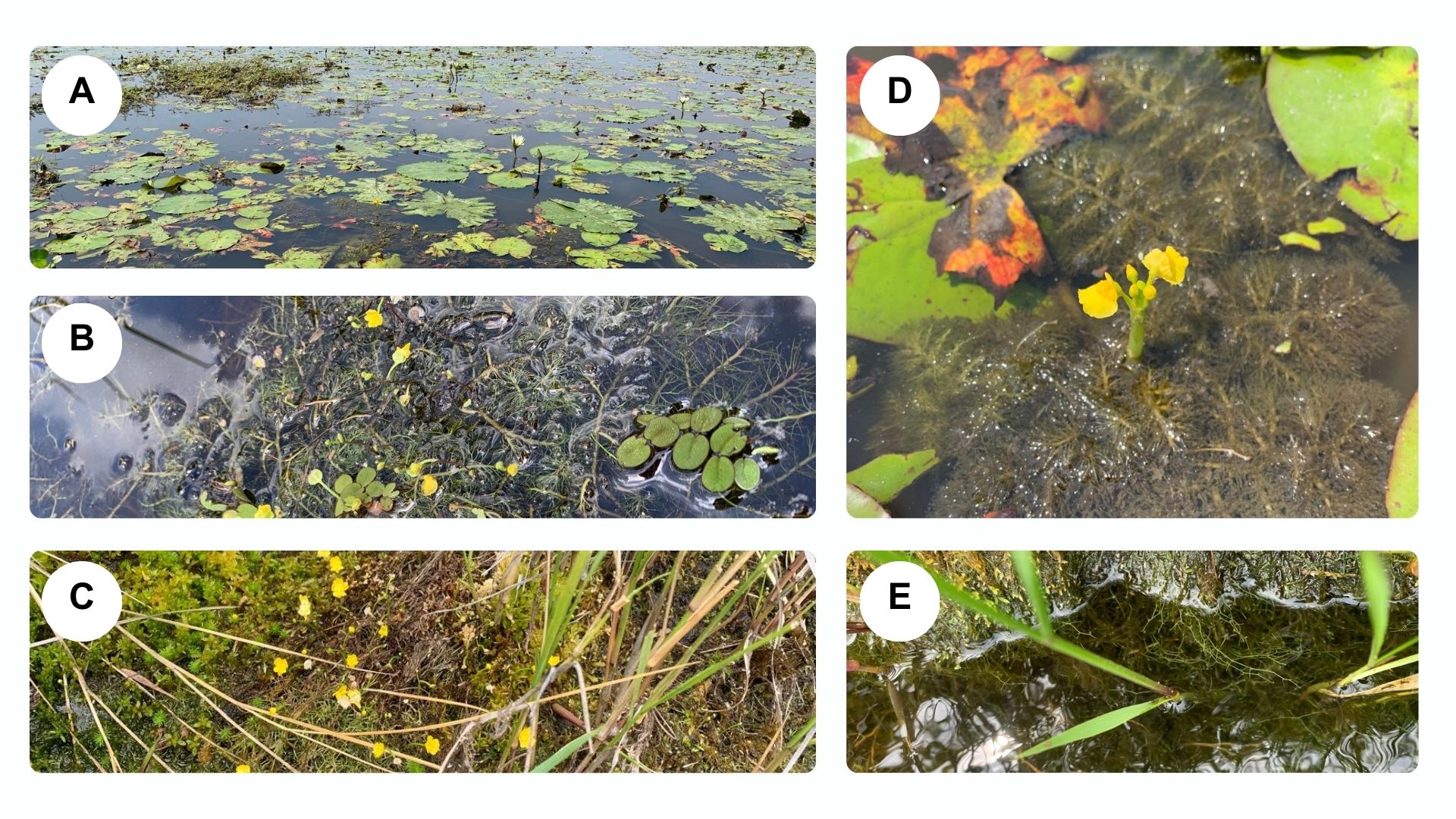
Fig. 1: Utricularia in wetlands. (A) U. foliosa and (B) Utricularia sp. in ponds of the Colombian Atlantic; (C) U. gibba in a stream in Minas Gerais, Brazil; (D) Flower of U. foliosa along with the extensive mats of stolons formed by this species in the water; (E) Green-toned utricles of Utricularia sp.
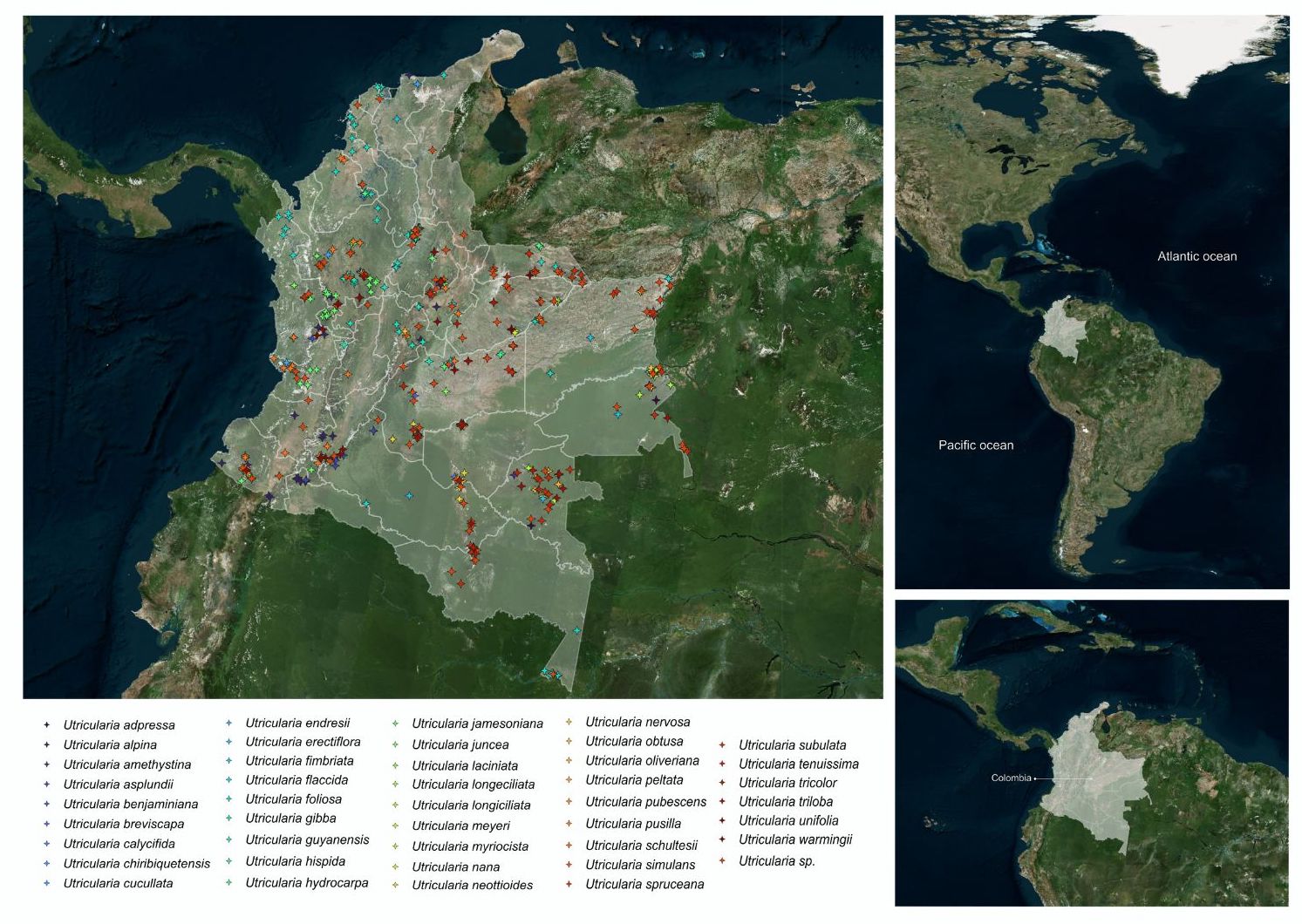
Fig. 2: Distribution map of species of the genus Utricularia in Colombia. The map shows the geographical distribution of the genus' species across the Colombian territory, bordered to the north by the Atlantic Ocean and to the west by the Pacific Ocean. Each species is represented by a distinct color for easy identification.
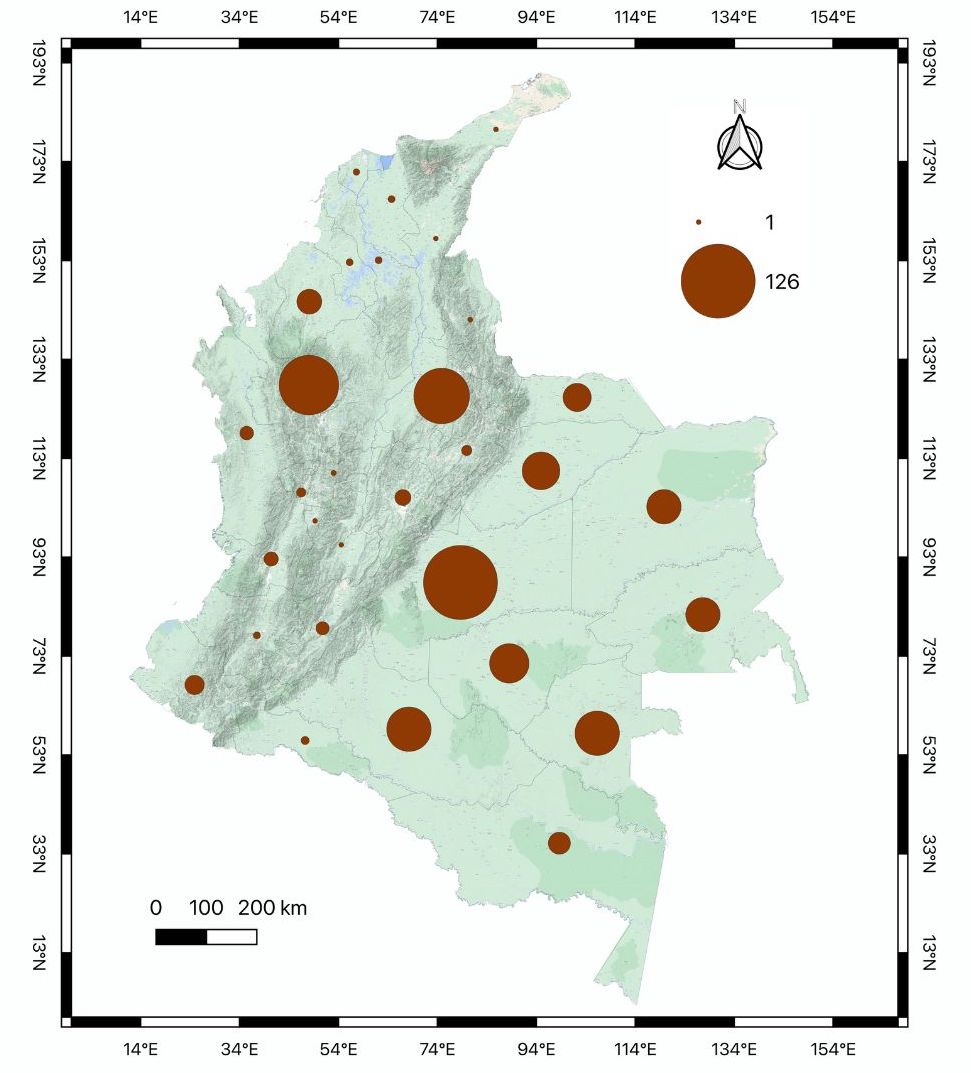
Fig. 3: Species richness map of Utricularia in Colombia. The size of the circles on the map is proportional to the species richness in each department, ranging from a minimum of one report to a maximum of 126 reports.