Isolation and Characterization of Halophilic Archaea from the Galerazamba Solar Saltern
Hypersaline environments, such as solar salterns, harbor microorganisms with unique adaptations and great biotechnological potential. Despite previous studies on bacteria in the Galerazamba salterns in Colombia, no archaeal isolates had been reported. This study reports the first isolation and characterization of a halophilic archaeon from this ecosystem. A strain, designated oMaY14, which forms circular, pink-reddish colonies, was isolated. Analysis of the 16S rRNA gene sequence identified it as a member of the Halobacterium genus, showing 99.84% identity with Halobacterium sp. strain NES11. The oMaY14 strain is capable of growing in a temperature range of 23 to 50°C, with optimal growth at 40°C, and at salt concentrations from 15% to 25%. Notably, the strain produces its distinctive pink-reddish pigmentation even under dark conditions. Analysis of the extracted pigments via UV-visible spectrophotometry revealed three characteristic absorption peaks at 466 nm, 492 nm, and 545 nm, corresponding to 13-cis-lycopene, all-trans-lycopene, and bacterioruberin, respectively. Raman spectroscopy confirmed the presence of bacterioruberin with prominent peaks at 1515 cm⁻¹ (C=C), 1156 cm⁻¹ (C–C), and 1009 cm⁻¹ (C=CH). This work describes a novel isolate with significant potential for the production of industrially relevant carotenoids.
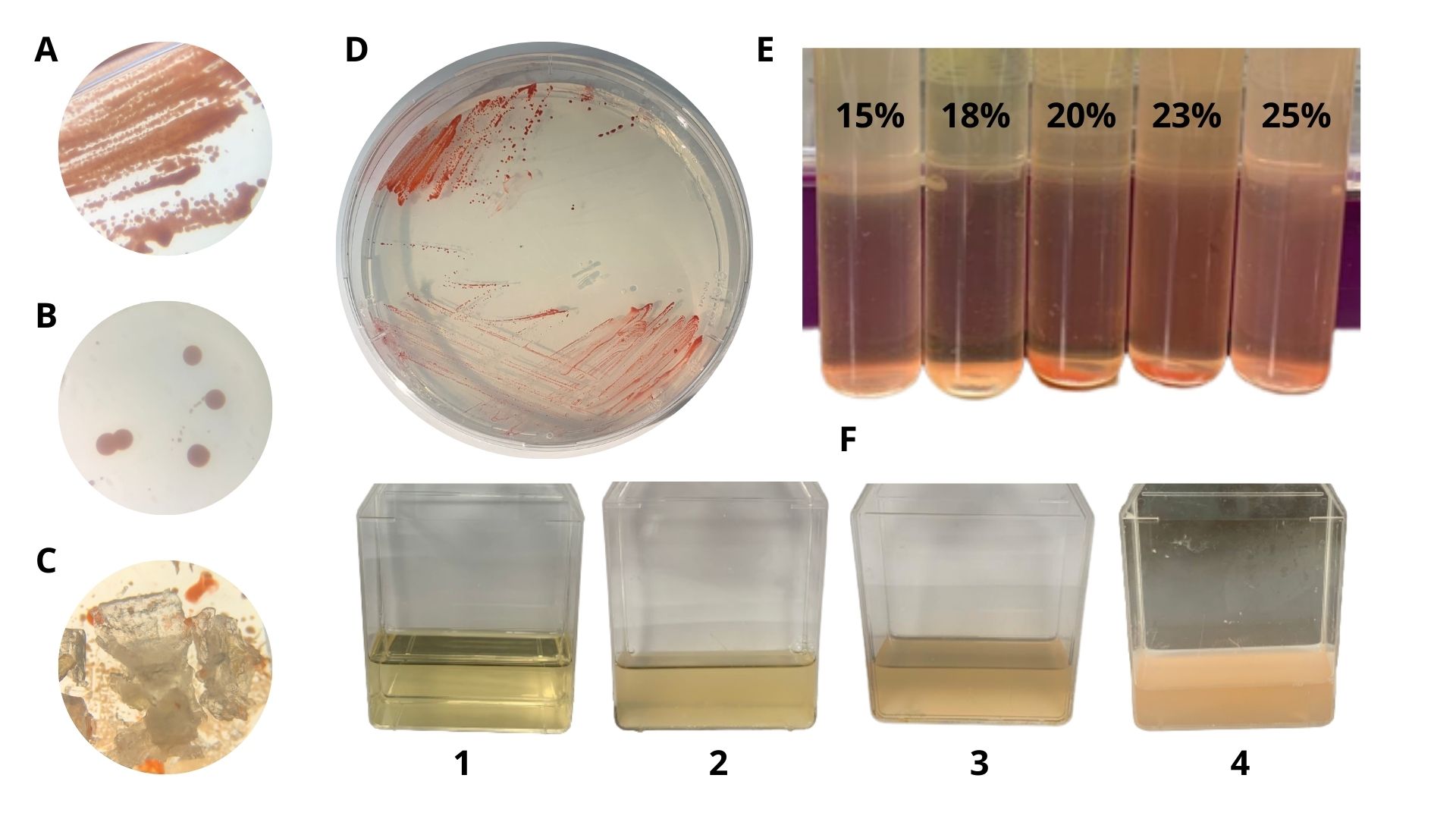
Fig. 1: Isolation and characterization of haloarchaeal oMaY14 isolate. (A) Streaking of oMaY14 in MGM 25%. (B) Circular colonies of oMaY14 displaying a pink-reddish. (C) Salt crystal with notablly colonies of oMaY14. (D) general view of oMaY14 on MGM 25% petri dish. (E) oMaY14 growth on MGM 15, 18, 20, 23, and 25% exhibiting a pink-reddish color. (F) progression of oMaY14 culture in 25% MGM over time: 5 days (2), 1 week (3), 2 weeks (4), and uninoculated media (1).
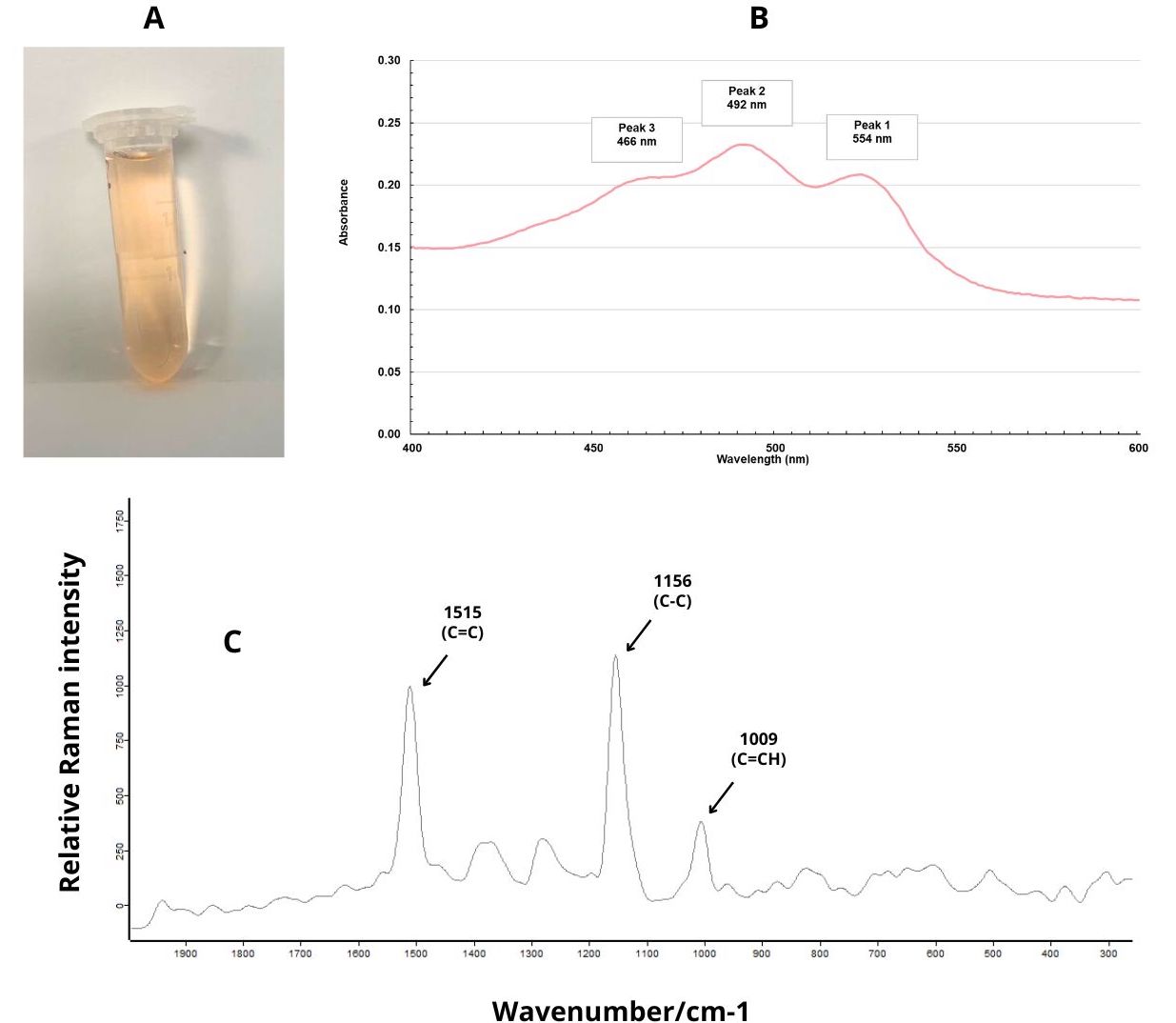
Fig. 2: Isolation and characterization of carotenoid isolated from haloarchaeal oMaY14 isolate. (A) The microcentrifuge tubes containing purified carotenoids with pink-redish color. (B) UV–visible absorption spectra of the purified carotenoids showing three carotenoid peaks at 466, 492 and 545 nm. (C) Raman spectra of carotenoid from haloarchaeal oMaY14 isolate. Raman peaks were detected at 1515, 1156 and 1009 cm-1.
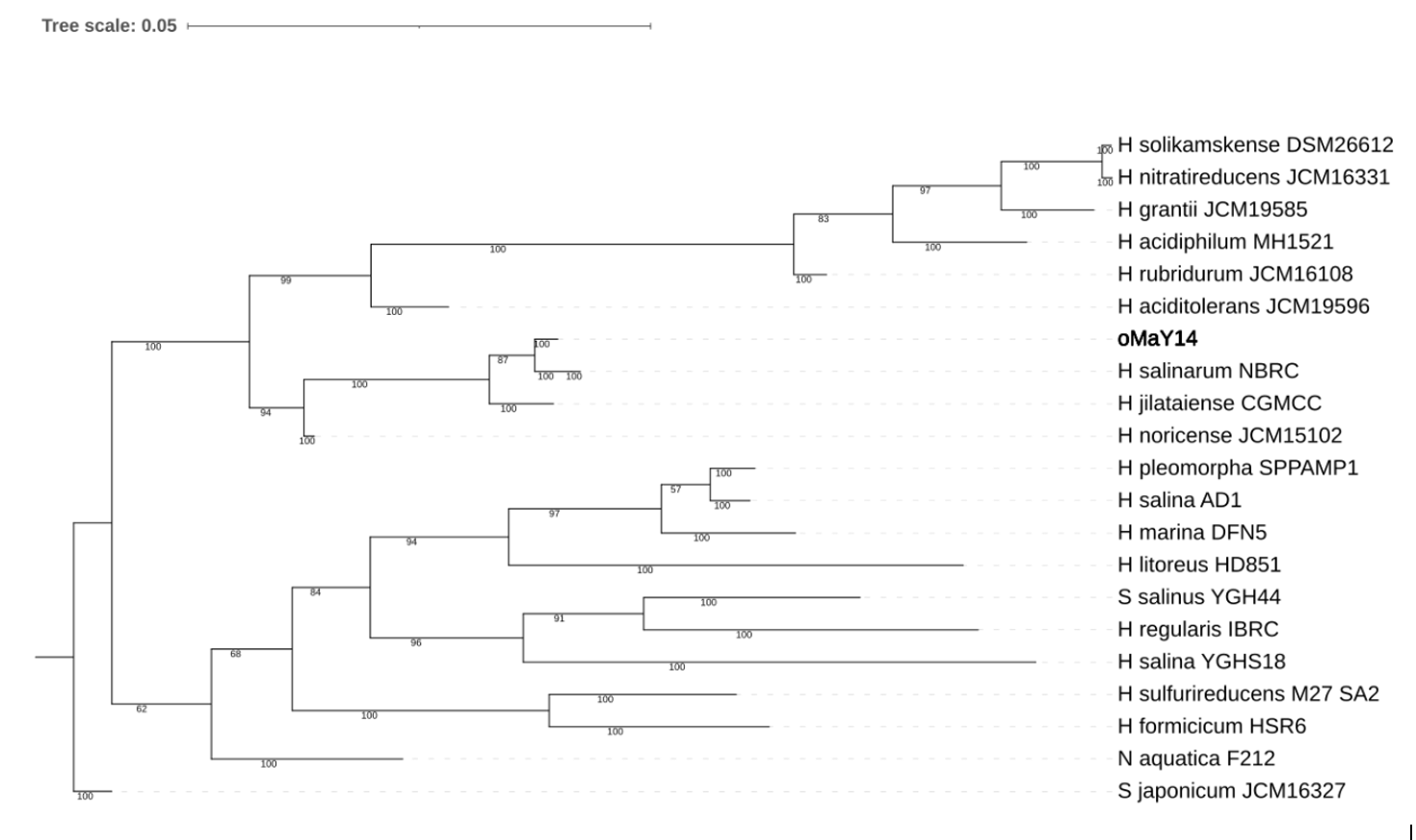
Fig. 3: Phylogenetic tree representing haloarchaea isolated oMaY14 from Galerazamba solar saltern, built using Bayesian method with MrBayes algorithm.The numbers below the nodes represent statistical support. The bar indicates evolutionary distance.